
photo by The Afghan Times
Dr Muhammad Hidayat Greenfield, Regional Secretary
There is no greater moral, social and political failure than the refusal of governments to protect the rights of children; to bring an end to all forms of child labour; and to ensure that all children have unconditional access to free public education, along with their families’ access to affordable housing, adequate and nutritious food, and public health care. A crucial enabling right is the right of adult workers, farmers and youth to freely organize and collectively represent themselves. Taken together, these are fundamental, universal human rights that should ensure that everyone, everywhere can enjoy what the Universal Declaration of Human Rights describes as a life worthy of human dignity.
Yet nearly eight decades after the the Universal Declaration of Human Rights was adopted in 1948, such a life remains beyond the reach of over 180 million children exploited as child labour today.
Many in the UN system and its public-private agencies today assume this exploitation is the result of impoverished parents and/or the uneducated, unaware adults that employ these children. Education, awareness and technical cooperation with governments is – we are told – the answer. Even as authoritarian and military governments brutally repress civilian populations, and democratic governments systematically deny and exclude people based on race, ethnicity, social origin, caste or religion, such actions are given international legitimacy through technical cooperation and capacity building.
Over 180 million children are not denied a life worthy of human dignity simply because of poverty or a lack of technical capacity within governments. This denial is institutionalized through discrimination and exclusion based on race, ethnicity, social origin, caste or religion. It is an institutionalized denial felt most of all by indigenous and First Nations peoples, who are first and foremost denied the right to the land and resources that are theirs to begin with. The resulting economic and political marginalization (reinforced by state violence) creates and perpetuates this poverty.
Ultimately this institutionalized denial undermines the universality of human rights (everyone, everywhere) by removing hundreds of millions of adults, youth and children not just from access to human rights, but from the category of being human. You cannot have a life worthy of human dignity if you are not even treated as human.

In September 2020, the Dutch global management of Chupa Chups maker Perfetti van Melle dismissed evidence of child labour at their factory in Bangladesh, laughing and joking during the presentation of photos, videos and school records. Far from being unusual, it illustrates what happens when children in Asia are not considered to be human.
Poverty and child labour continue not simply due to insurmountable economic challenges and government capacity, but because poverty alleviation and eliminating child labour have become economic activities in and of themselves. It justifies the existence of government programs and a vast network of foundations, NGOs and public-private institutions. As long as such marginalization and institutionalized denial persists, any policies aimed at “poverty alleviation” and “inclusion” end up as a bureaucratic state enterprise or a profitable commercial business activity – or both.

Of the 52 workers who died in the Hashem Foods Factory fire in Bangladesh on July 10, 2021, 19 were children. The factory made food products for brands like Lotte from South Korea and Nocilla from Spain, but none of these companies took responsibility. While the factory fire was still burning national trade union confederation officials, offering a “Rana Plaza” formula, contacted families and offered to get compensation in return for a share of the money. Dozens of foundations and NGOs then became involved. From the ILO office silence, as the entire focus shifted (again) not to human rights and collective human rights of workers, but to fire safety standards.
In several countries in South and Southeast Asia, we see dozens (and in some countries hundreds) of foundations, NGOs, consultancies, advisory groups and even some national trade unions engaged in the business of talking about child labour (a source of international project funding and corporate funding) rather than concerted action to end child labour.
And yet standing apart – underfunded, underrepresented, and often ignored – are those committed foundations, NGOs, networks, alliances, journalists, and community organizations dedicated to advocacy, education and action who remain courageously determined to bring an end to child labour.
It is our moral, social and political obligation as trade unions to extend our solidarity and support to these courageous, committed organizations and ensure their success. They must be heard and their impact must be felt.
We can no longer stand by and blame structural poverty, lack of awareness or insufficient government technical capacity for the continued rise in child labour globally. We must fight against institutionalized denial, and fight together with marginalized peoples to remove the barriers preventing their access to universal human rights, including the right to live a life worthy of human dignity. Child labour disappears when these rights are realized, as children have food, housing, health care and access to quality education that includes, welcomes and nurtures them without denying or destroying their cultural, religious and social values and identity. And without requiring it to be financially profitable.
To be clear, a civilizing mission to educate poor people to stop their children being brutally exploited in work is no longer needed (it never was). When adults have access to decent work and livelihoods, to land and resources, and youth have access to lifelong skills learning and quality apprenticeships and their own culture and belief systems, then they will themselves ensure their collective access to rights and an end to child labour. They know how to love their children. No technical cooperation, lectures or posters are needed.

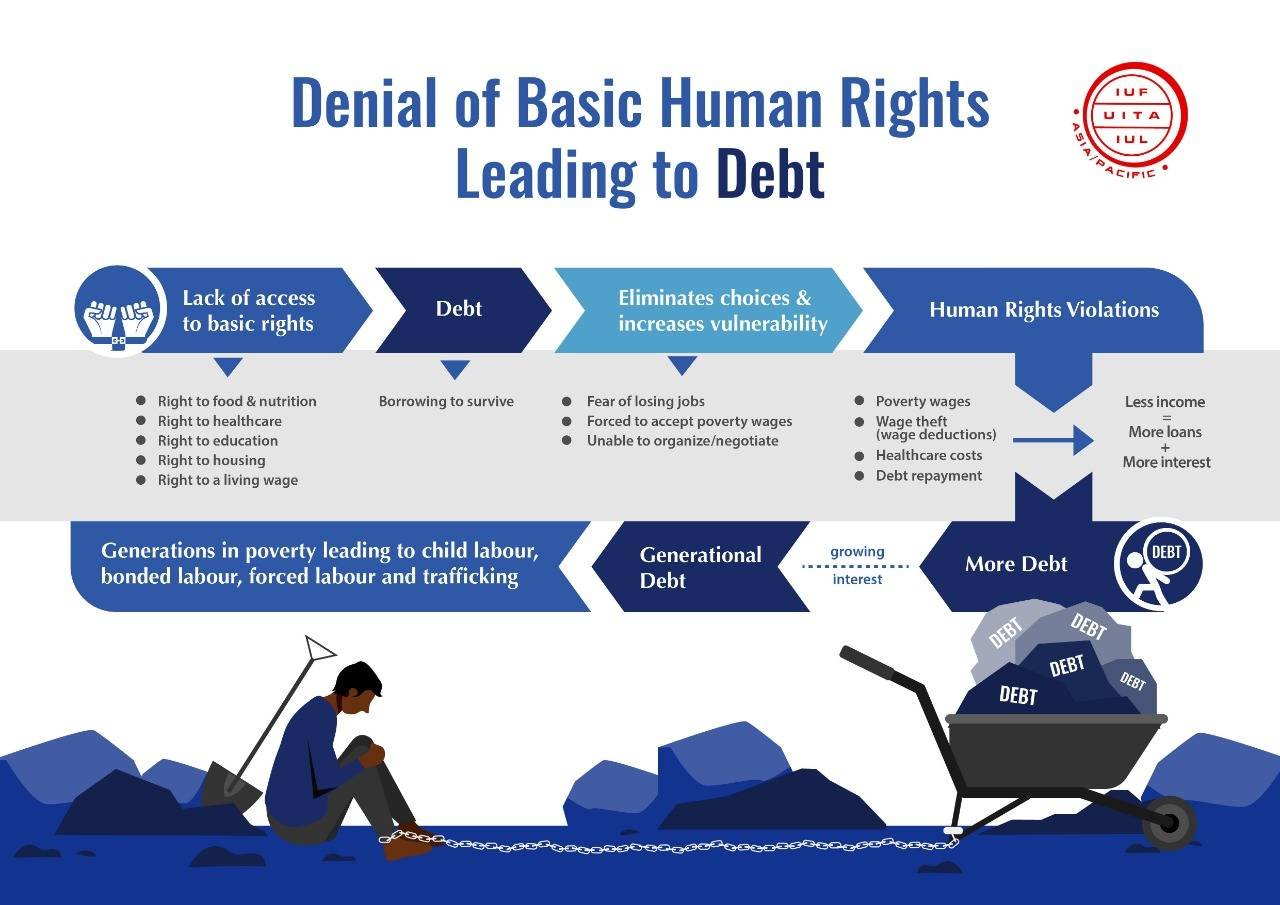
Global companies allocate significant resources to NGOs, accreditation agencies and foundations to manage the child labour issue in their supply chains. As these organizations and their experts consume the premium before it reaches farmers, we end up with posters telling ‘uneducated’ farmers not to use child labour and instead use good agricultural practices. Much like colonial times, the focus is on behaviour and culture change (becoming more “civilized”) rather than overcoming debt and access to human rights.
It is of course governments and their failed international institutions that need greater awareness, posters and public campaigns to pressure them into action.
With all its faults and limitations, the Universal Declaration of Human Rights was adopted in 1948 at what was thought to be the beginning of the end of colonialism, promising racial equality, an array of human rights, and a life worthy of human dignity. For hundreds of millions of adults, youth and children today – including 180 million children in child labour – it seems that none of this has been achieved yet. That is our collective failure. In the light of this failure, it remains our collective responsibility to organize and take social and political action to realize these goals.
Also see eliminating child labour in agriculture needs guaranteed living wages, fair crop prices and freedom from debt (May 4, 2021) and for social protection to be effective it must empower women, advance workers’ rights and redistribute wealth (Nov 18, 2022)

photo by The Afghan Times