Sangat sedih bagi kita semua saat mengetahui informasi meninggalnya Sister Ela R. Bhatt, pendiri Self-Employed Women’s Association (SEWA) di India, pada tanggal 2 November 2022. Seluruh afiliasi IUF yang berada di wilayah Asia-Pasifik memberikan ucapan belasungkawanya kepada anggota SEWA.
Selama tiga hari terakhir, ribuan penghormatan telah dipublikasikan oleh berbagai media, masyarakat sipil, Serikat Pekerja dan dunia akademis untuk menghormati dan mengenang Elaben, sebagai bentuk pengakuan atas kehidupannya yang luar biasa dalam berkomitmen pada keadilan bagi perempuan dan kontribusinya yang luar biasa terhadap hak dan pemberdayaan perempuan.
Pembelajaran mengenai nilai dan bimbingan yang telah dilakukan Elaben terus bergema pada wanita di seluruh dunia secara jelas. Seruan Elaben untuk membangun kembali dan memulihkan komunitas lokal yang saling mendukung di mana perempuan memainkan peran utama sangat dibutuhkan saat ini lebih dari yang sebelumnya dalam hal menghadapi krisis iklim, krisis pangan, dan krisis ekonomi global. Sama pentingnya di masa-masa kekerasan, konflik, dan perang yang menakutkan ini merupakan komitmen Eleben terhadap transformasi damai dan sarana tanpa kekerasan. Pada kegiatan yang berhubungan dengan kekuatan perempuan, keadilan ekonomi dan perdamaian inilah, kita menemukan jawaban yang yang tidak bisa dilakukan oleh pemerintah.
Kami juga ingat bahwa Elaben berkomitmen tidak hanya untuk hak-hak perempuan, tetapi juga untuk mengorganisir pekerja perempuan. Pemberdayaan dicapai tidak hanya melalui peningkatan pendapatan dan penghidupan perempuan melalui akses terhadap sumber daya dan kewirausahaan, tetapi secara aktif membangun kekuatan kolektif mereka sebagai pekerja dalam serikat pekerja.
Asal-usul SEWA terletak pada perjuangan untuk mendirikan SEWA tidak hanya sebagai organisasi perempuan yang bekerja di berbagai pekerjaan berbasis rumahan dan sektor informal, tetapi sebagai serikat buruh perempuan. Otoritas Departemen Tenaga Kerja di tingkat negara bagian awalnya menentang pendaftaran SEWA sebagai serikat pekerja karena anggotanya tidak memiliki manajemen/ majikan. Elaben berargumen bahwa mempersatukan pekerja perempuan – memastikan keterwakilan dan kekuatan kolektif mereka – menjadikan SEWA sebagai serikat pekerja, bukan kehadiran atau ketidakhadiran pemberi kerja. SEWA kemudian didaftarkan sebagai serikat pekerja pada 12 April 1972.
Pelajaran ini masih berperan penting bagi kita sebagaimana jutaan pekerja muda dijadikan seolah-olah sebagai pekerja yang bekerja untuk dirinya sendiri, yang mana harusnya kita bersatu sebagai perwakilan kolektif serta perwujudan dari kekuatan kolektif. Mereka butuh dan harus memiliki hak untuk membentuk trade union.
SEWA membentuk kekuatan tawar menawar kolektif yang terorganisir dari pekerja perempuan wiraswasta untuk pertama kalinya. Di antara keanggotaan IUF di SEWA, keberhasilan luar biasa para pekerja perempuan beedi (tembakau) dalam menawar secara kolektif harga yang dibayarkan oleh pembeli merupakan salah satu contohnya. Pengalaman yang sama terulang dengan pekerja dairy perempuan. Representasi kolektif dan kekuatan SEWA sebagai serikat pekerja juga memungkinkan pedagang sayur dan penjual makanan untuk mempertahankan hak dan kepentingan mereka dalam bernegosiasi dengan otoritas pemerintah. Inilah pemberdayaan yang mengalir dari nilai dan karya Elaben serta keadilan ekonomi dan sosial yang ia harapkan. Seperti yang ditulis Elaben dalam edisi pertama SEWA Rashtriya Partika, pada April 2016, melalui pengorganisasian perempuan dapat “mencapai SUARA, VISABILITAS, dan VALIDASI yang sangat dibutuhkan”.
Untuk menghormati komitmen seumur hidup Elaben terhadap keadilan ekonomi dan sosial bagi pekerja perempuan dan pemberdayaan kolektif mereka, Organisasi Regional IUF Asia/Pasifik akan memastikan bahwa gagasan, tulisan, pelajaran dan tindakan Elaben diajarkan kepada generasi muda pemimpin serikat pekerja tiap di wilayah. Memang, tindakan Elaben – berbicara dengan pekerja perempuan, berada di antara mereka, membantu mereka membangun kepercayaan diri untuk menjadi pemimpin sendiri – itulah pelajaran terpenting kita.
Foto Elaben bersama penjual sayur di Ahmedabad setelah mendapat perlindungan hukum atas haknya sebagai pedagang kaki lima. Foto diambil pada 25 Februari 2010 oleh fotografer Tom Pietrasik
It’s increasingly common in speeches, meetings, conferences and policy documents today that organizations/governments/companies reaffirm that they have incorporated a gender-based approach or gender perspectives.
And of course we include a gender perspective and recognize the important role of women.
It’s the “of course” that should make us nervous. It implies that it’s so damn obvious that we should not doubt it. It’s pronounced with an air of the obvious, but it’s also somehow defensive. It’s almost like an insurance policy against criticism for failing to take gender perspectives and the role of women into account. But we’re often left wondering how gender perspectives were actually included, how did women participate in this (whatever it is), and did women actually shape its outcome? We’re left asking, “Okay, but did this gender perspective actually change anything?”
Reading through recent reports and policy documents from a number of international institutions, including UN agencies, the World Bank and its the International Finance Corporation (IFC) and the IMF, there are constant references to gender perspectives, gender-based approaches and gender-sensitive policies. There’s even gender-based resilience now.
Whole chapters are dedicated to gender perspectives. In most cases it simply means women are included in the data now. There’s a gender breakdown in the facts and figures that wasn’t there a decade ago. So women are visible for the first time in the data. Governments, companies and international agencies can now say “of course”. But what happens with this data? How does it change the situation women are in? How do women use it change the situation they are in? Ten years from now, will the data show this change? (During the pandemic the data did change. The gender pay gap widened again, setting women back a decade or more.)
In these gender perspectives there are boxes with case studies, stories, and the voices of women. Or more precisely, the voice of a woman: a women who was resourceful enough to battle her way out of poverty or force her way in from the margins. No doubt it was a struggle and we absolutely respect that. But more often than not it’s about individual women. Not groups of women. Not collectively organized women. Not women whose combined power disrupted the privilege, power and status of men.
These success stories tend to show how women (or a woman) closed the gender gap and reached or surpassed whatever men were doing. Again, we don’t take this lightly and we respect how hard that is. But we rarely see in this gender-based approach or gender perspective men doing anything to close the gap. Men stay still, women work ten times harder to get to where the men are. In other words, men preserve the privilege and power of patriarchy and women have to figure out how to get past them.
The point is that gender perspectives and gender-based approaches are meaningless if they do not address the issue of power. By extension, gender perspectives and gender-based approaches are only of consequence if they contribute to women combining to exercise their collective power to bring about fundamental change. A gender perspective shouldn’t be static point of view (a snapshot, profile or dataset). It has to be a dynamic process of interaction between the systemic and institutionalized vulnerability and marginalization of women, women’s collective confidence and their ability to organize, and the collective struggle of women to overcome discrimination, oppression and exploitation.
As I’ve argued elsewhere: Patriarchy is not an attitude. It is an arrangement of power (a regime) designed to oppress and exploit women. It intentionally restricts the collective power of working people, and undermines the power of our organizations. It is not cultural, it is political.
For gender perspectives and gender-based approaches to be meaningful, they must be political. To be consequential they must contribute to increasing the collective power of women.
In this context we need critically assess any claim to include gender perspectives and gender-based approaches. We must ask how do women have more power in decision-making? How do women have more control (in the allocation of resources and exercise of rights and representation) to determine both the action and its outcomes? How do women use their collective power to institutionalize (lock in) these gains and ensure that whatever was gained isn’t taken away?
If gender perspectives in research, policies, programs and state actions don’t guarantee more power for women in decision-making and control over resources, then they are just points of view. Of course then nothing changes, everything remains the same.
It is with great sadness that we learned of the passing of Sister Ela R. Bhatt, the founder of the Self-Employed Women’s Association (SEWA) in India, on November 2, 2022. Throughout the Asia-Pacific Region, IUF affiliates have expressed their condolences to the members of SEWA.
Over the past three days, thousands of tributes have been published by the mainstream media, Civil Society Organizations, trade unions and the academic world in honour of Elaben, recognizing her extraordinary life committed to justice for women and her incredible contribution to women’s rights and empowerment.
Clearly Elaben’s teachings, values and guidance continue to resonate with women around the world. Elaben’s call to rebuild and restore mutually supporting local communities in which women play a leading role is needed now more than ever in the face of the climate crisis, food crisis and global economic crisis. Just as important in these fearful times of violence, conflict and war, is the example of Elaben’s deep commitment to peaceful transformation and non-violent means. It is in this nexus of women’s power, economic justice and peace, that we find the answers that governments cannot.
We also recall that Elaben was committed not only to women’s rights, but to organizing women workers. Empowerment was achieved not just through the improvement of incomes and livelihoods of women through access to resources and entrepreneurship, but in actively building their collective power as workers in a trade union.
The very origins of SEWA lie in the struggle to establish SEWA not only as an organization of women working in a range of home-based and informal sector occupations, but as a trade union of women workers. Labour Department authorities at state level initially opposed the registration of SEWA as a trade union because its members have no employer. Elaben argued that bringing together women workers in unity – ensuring their collective representation and collective power – is what makes SEWA a trade union, not the presence or absence of an employer. SEWA was subsequently registered as a trade union on April 12, 1972.
This lesson remains important for us today as millions of young workers are designated as self-employed and need to come together for collective representation and collective power. They need – and have a right to form – a trade union.
SEWA established the organized, collective bargaining power of self-employed women workers for the first time. Among IUF’s membership in SEWA, the tremendous success of the beedi (tobacco) women workers in collectively bargaining the prices paid by buyers is an example of this. The same experience was repeated with women dairy workers. The collective representation and strength of SEWA as a trade union also enabled vegetable vendors and food sellers to defend their rights and interests in negotiating with government authorities. This is the empowerment flowing from the values and work of Elaben and the economic and social justice she hoped for. As Elaben wrote in the first issue of SEWA Rashtriya Patrika, in April 2016, through organizing women can “achieve much needed VOICE, VISIBILITY and VALIDATION”.
To honour Elaben’s lifelong commitment to economic and social justice for women workers and their collective empowerment, the IUF Asia/Pacific Regional Organization will ensure that the ideas, writings, lessons and actions of Elaben are taught to a younger generation of trade union leaders in the region. Indeed, it is Elaben’s actions – of going out to talk to women workers, to be among them, to help them build the confidence to become leaders themselves – that is our most important lesson of all.
Photo of Elaben with vegetable sellers in Ahmedabad after winning legal protection of their rights as street vendors. The photo is taken on February 25, 2010, by photographer Tom Pietrasik
The concept of “sex work” is incompatible with decent work. Decent work is not a description of work – good jobs vs. bad jobs, decent vs. indecent. It is a term intended to capture a broad range of comprehensive and far-reaching measures needed to ensure that workers exercise their collective and individual human rights. It refers to the preconditions for workers’ human rights to be fully realized. It is not about money (wages, income), but about the fulfillment of workers’ aspirations.
According to the ILO: “… decent work sums up the aspirations of people in their working lives. It involves opportunities for work that is productive and delivers a fair income, security in the workplace and social protection for families, better prospects for personal development and social integration, freedom for people to express their concerns, organize and participate in the decisions that affect their lives and equality of opportunity and treatment for all women and men.”
With these preconditions all work – regardless of how dangerous, difficult, or underpaid – can become decent work. “Sex work” – the selling of women for sexual use and exploitation – cannot. The preconditions for “sex work” are poverty, debt, a lack of social protection, insecurity, marginalization, displacement by conflict and war, and trafficking. This is what forces women into prostitution. It is compulsion, not choice.
“Sex work” cannot become decent work because the so-called “sex industry” needs the economic, social and physical vulnerability of women and girls. As a “business” generating profit it must perpetuate this vulnerability to expand its resources. Bringing an end to the economic, social and physical vulnerability of women and girls – which is integral to the very meaning of decent work – would bring an end to the “sex industry” itself.
To argue that prostitution is work is to argue that it is comparable to any other form of waged work: selling your labour-power in exchange for a wage. This mental and physical labour-power (and all forms of work are a combination of both), produces a product or service. Yet in “sex work” what is sold is not a woman’s mental and physical labour-power, but herself. She is the commodity. She is the product that is consumed. This precludes all the preconditions for decent work. Because it is not work.
Prostitution is an industry because it is allowed or encouraged to operate, generating massive economic wealth – criminal profits. But the exploitation of women in this industry to create that profit is not employment. Women are not employed to provide a service (selling their labour-power for a wage), they are the product. It is therefore not employment, but the enslavement of women and girls, reinforced by their patriarchal treatment as commodities, as property. It is impossible to ensure access to the rights so integral to decent work because goods – commodities, products – do not have rights. This underpins the business logic of this criminal enterprise.
The notion of prostitution as “sex work” is contingent on the claim that she has chosen this employment. It is her choice. This ignores all the force and compulsion we referred to earlier. The deliberate and systematic exploitation of the economic, social and physical vulnerability of women and girls due to poverty, debt and displacement, produces force. Not choice.
In our work on modern slavery in the fisheries industry we have rescued fishers from trafficking and forced labour. I have not once heard any government, company, union or NGO suggest that he was on that boat by choice. They recognize that for reasons of poverty, debt and displacement he was on that boat – through no choice of his own – and subjected to horrendous and degrading treatment. Why do these same organizations suggest that women exploited in prostitution made a choice? And what happened to our outrage at horrendous and degrading treatment?
The only way in which we could possibly consider this a choice is if all the preconditions of force and compulsion are eliminated. What does that mean? It means that we first eliminate poverty, debt, displacement, trafficking, forced labor, and the vulnerability of women and girls that leads to trafficking and forced labor. There must be social protection for all, health for all, freedom from debt. We must establish the comprehensive social protection that the UN General Secretary called for in September last year and eradicate poverty. We must create jobs, guarantee a living wage, and ensure that everyone has access to the universal human right to housing, education, food and nutrition as guaranteed in the UN Declaration on Human Rights. Only then is it possible to argue that choices are being made.
Yet we are so far from this condition. Instead, we face increasing poverty, debt and displacement in the next decade. This means the increased vulnerability of millions of women and girls. It means increased exploitation of women and girls in prostitution.
As the global tourism gradually recovers with the promise to “build back better”, governments, resort owners and tourism industry operators will once again encourage and promote prostitution as a tourist attraction – as entertainment. There is no doubt that sex tourism will be a driver of foreign exchange earnings and business recovery in many countries. The women and girls exploited in this sex tourism will remain poor because the industry needs them to be poor; it needs them to be perpetually vulnerable.
Article 23 of the Universal Declaration on Human Rights refers to the right to earn an income that ensures “an existence worthy of human dignity.” What happens when earning that income forcibly rips away your dignity and – by treating you as a product, as property – tries to take away your humanity too? Survivors have courageously struggled to recover their human dignity by escaping trafficking and prostitution and helping others to do so. Calling prostitution “sex work” denigrates that courageous struggle and simply casts doubt on our own humanity and human dignity.
Dr Muhammad Hidayat Greenfield, IUF Asia/Pacific Regional Secretary
Throughout the month of November, affiliated unions across the Asia-Pacific region launched a renewed effort to raise awareness and mobilize members to reduce the vulnerability of women workers, overcome fear, and eliminate all forms of violence against women. These coordinated activities across the region were the result of the decision of the IUF Asia/Pacific Regional Women’s Committee to mobilize for the International Day for the Elimination of Violence Against Women on November 25, 2021, and promote the Violence and Harassment Convention, 2019 (No. 190) and Violence and Harassment Recommendation, 2019 (No. 206).
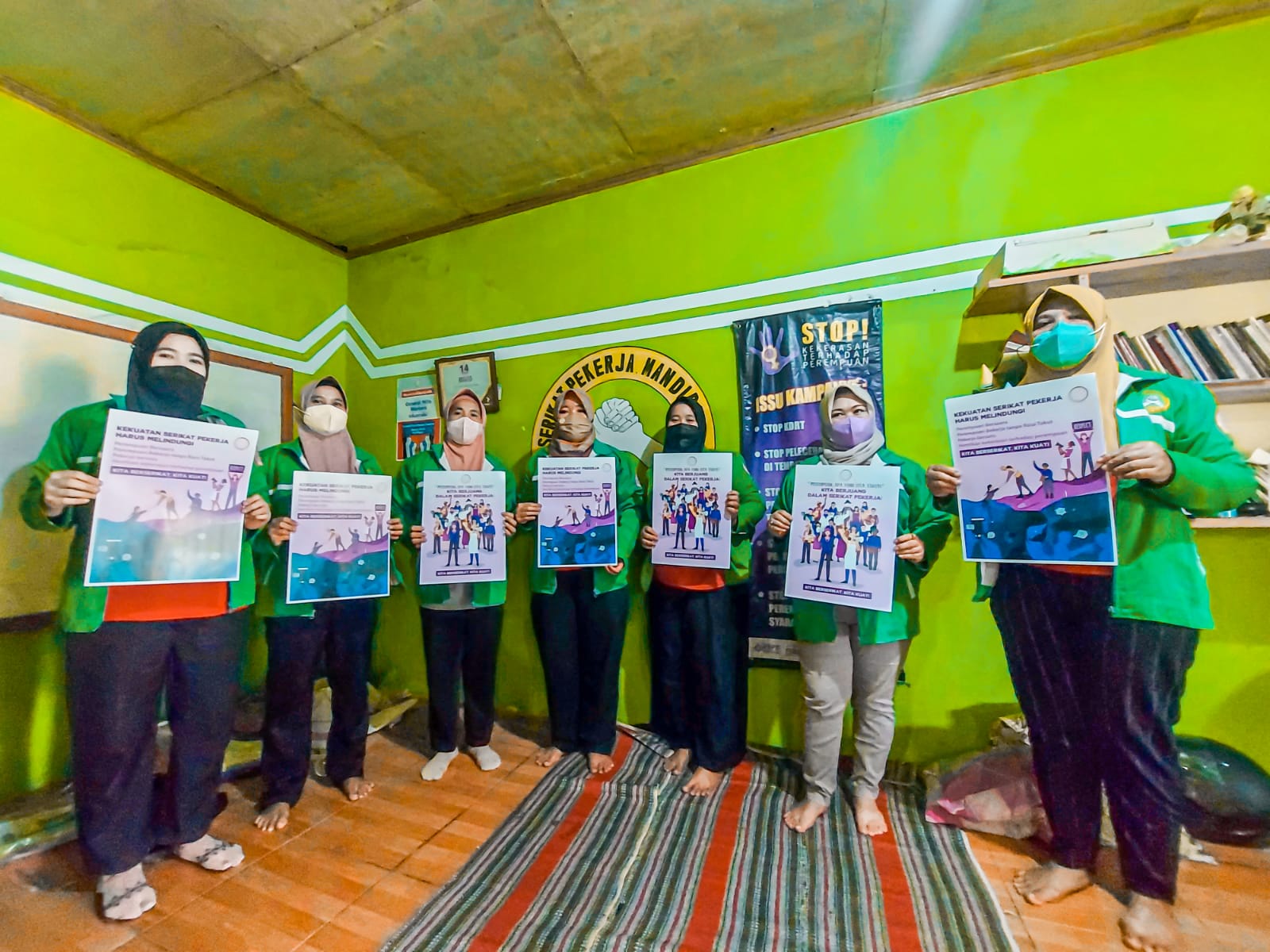
The IUF Asia/Pacific posters and the statement for the International Day for the Elimination of Violence Against Women were distributed in 21 languages in the Asia-Pacific region, including English, Japanese, Bengali, Hindi, Urdu, Sindhi, Pashto, Nepali, Sinhalese, Indonesian, Khmer, Thai, Tagalog, Chinese (traditional), Chinese (simplified), Burmese, Karen, Kachin, Mon, Arkanese and Shan.
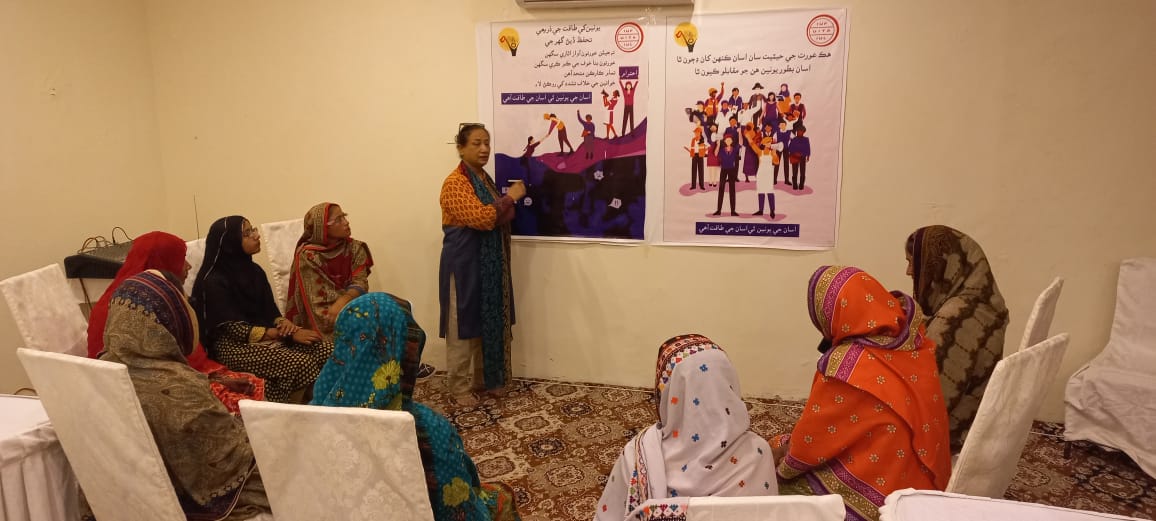
In Pakistan the women agricultural and farm workers’ union, Sindh Nari Porhyat Council (SNPC), held an education programme for members on November 27, explaining the role of the union in ensuring that women can work free from violence. This includes measures to protect women when traveling to and from work and when physically isolated in farms and fields.
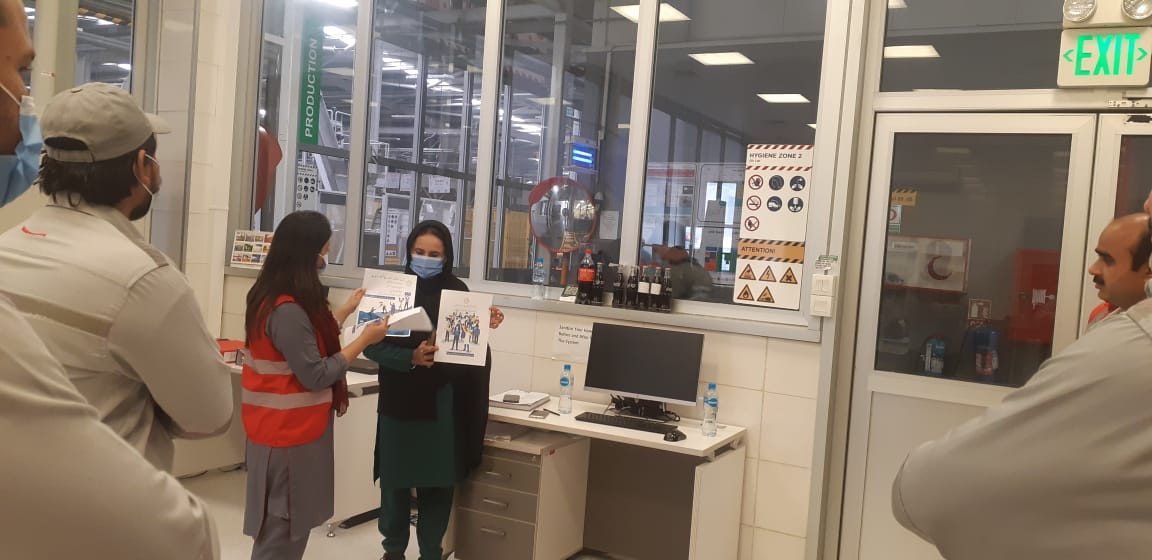
In the food and beverage sector, the women’s officers of the Pakistan Food Workers’ Federation (PFWF), explained the posters to union members in the workplace – targeting men workers – and distributed education material. This was vital in improving members’ awareness and understanding of the causes of violence against women and that stopping this violence is the responsibility of all union members, not only women. Discussions focused on ways to ensure a safe and secure workplace for women.
IUF-affiliated unions in Pakistan together with affiliates of Public Services International (PSI) jointly organized a seminar in Hyderabad on the ratification and adoption of ILO Convention No.190 and Recommendation No.206 on November 27, 2021. A second seminar on ILO Convention No.190 and Recommendation No.206 was held on November 29 in Karachi and was attended by trade unionists, journalists and parliamentarians. The meeting resolved to reform a committee to develop a national strategy for the ratification of ILO Convention No.190.
In Bangladesh, IUF-affiliated unions also organized a seminar on the ratification and adoption of ILO Convention No.190 and Recommendation No.206 on November 20, 2021. This was followed by education and awareness activities at factories and workplaces.
The seminar recommendations included the urgent need for legislation and policies in line with ILO Convention No.190, and that provisions for forming a joint sexual harassment prevention committee consisting of equal representation of workers and employers in each factory to be included in the Bangladesh labour law. The meeting called for amending labour laws to give the right to form trade unions for workers engaged in the informal sector, including domestic workers and non-farm agricultural waged workers. It is necessary to fix minimum wages for women workers in this sector and extend social protection to reduce their vulnerability.
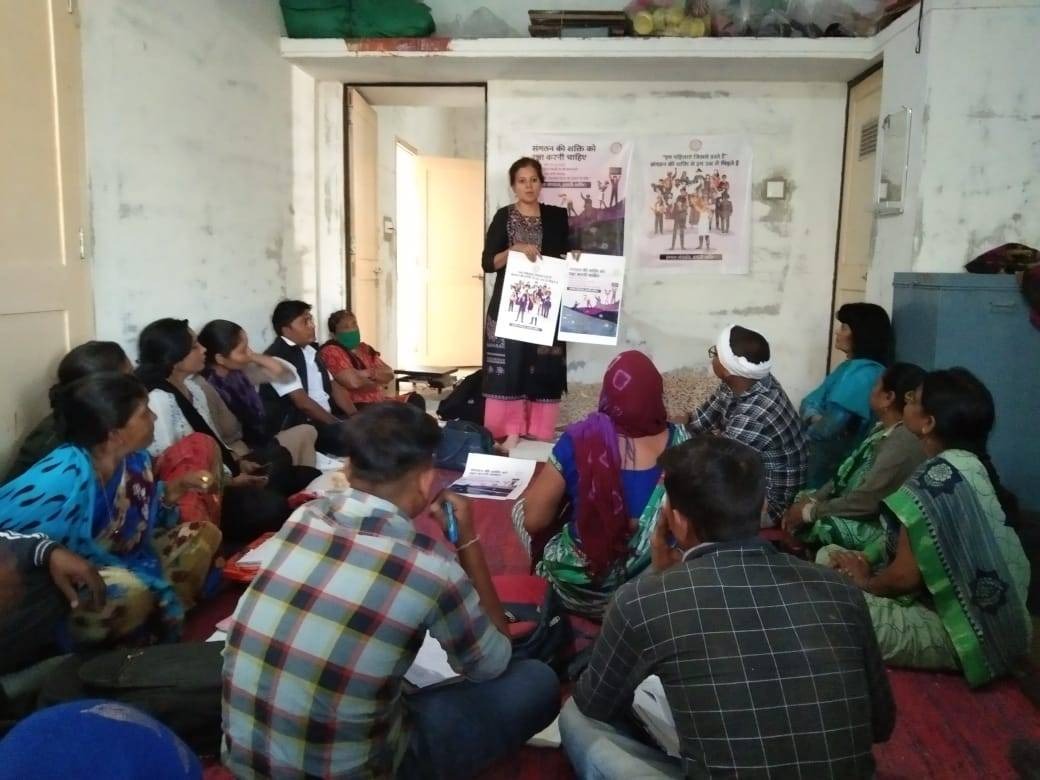
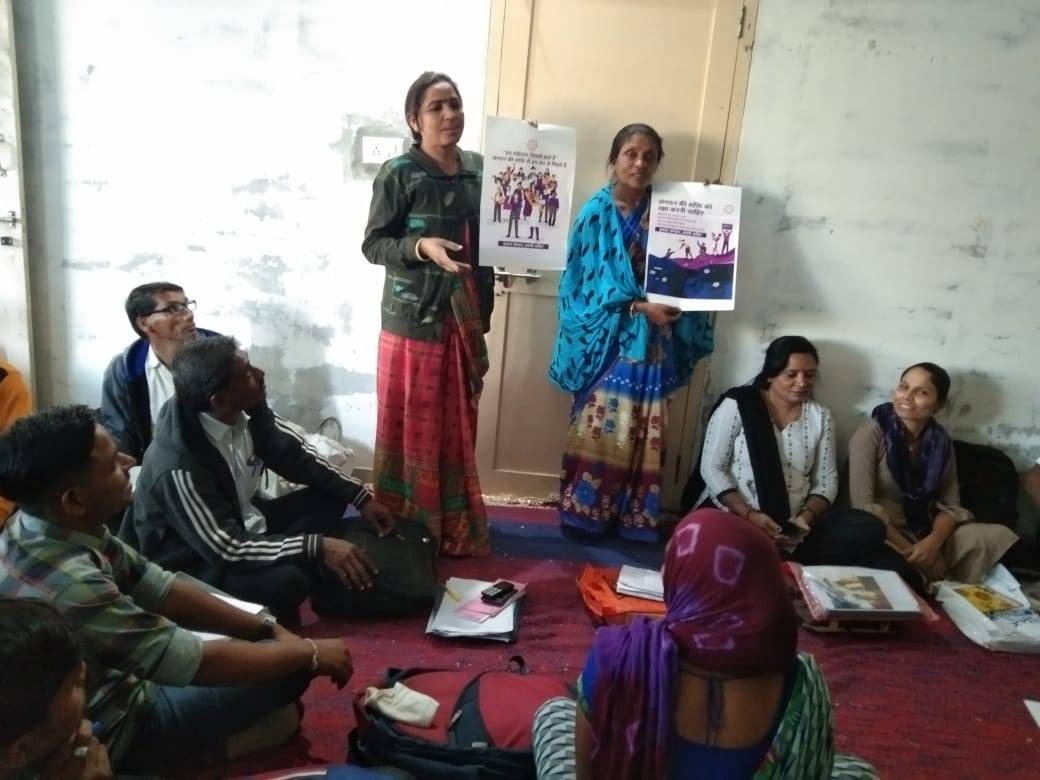
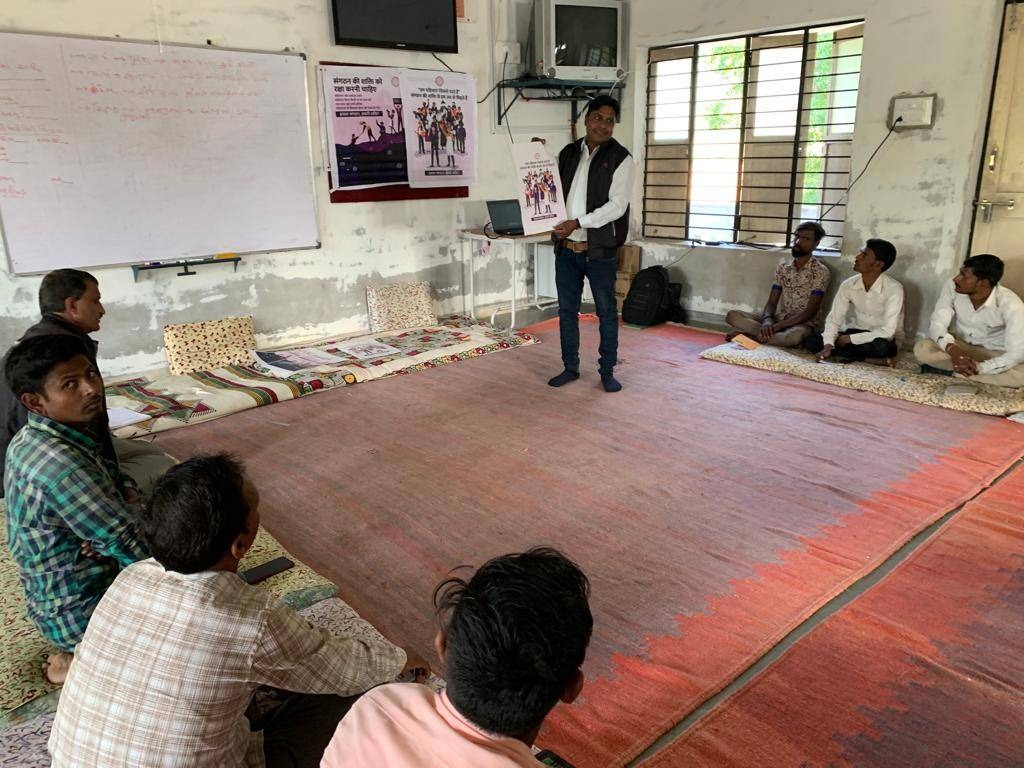
In India, the General Secretary of the Gujarat Agriculture Labour Union (GALU) organized series of education sessions on eliminating violence against women with local organizers so they can use the posters in their own meetings in villages. GALU also made eliminating violence against women a part of their program in the “School of Democracy” run to educated rural youth on union activities and public governance.
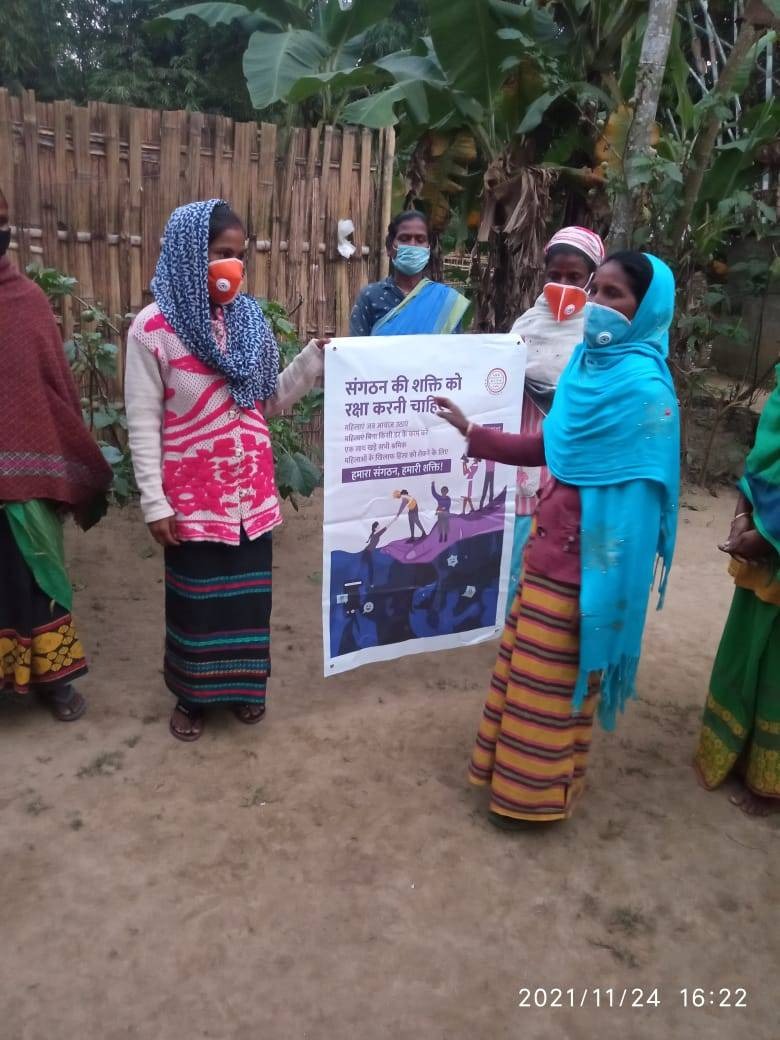
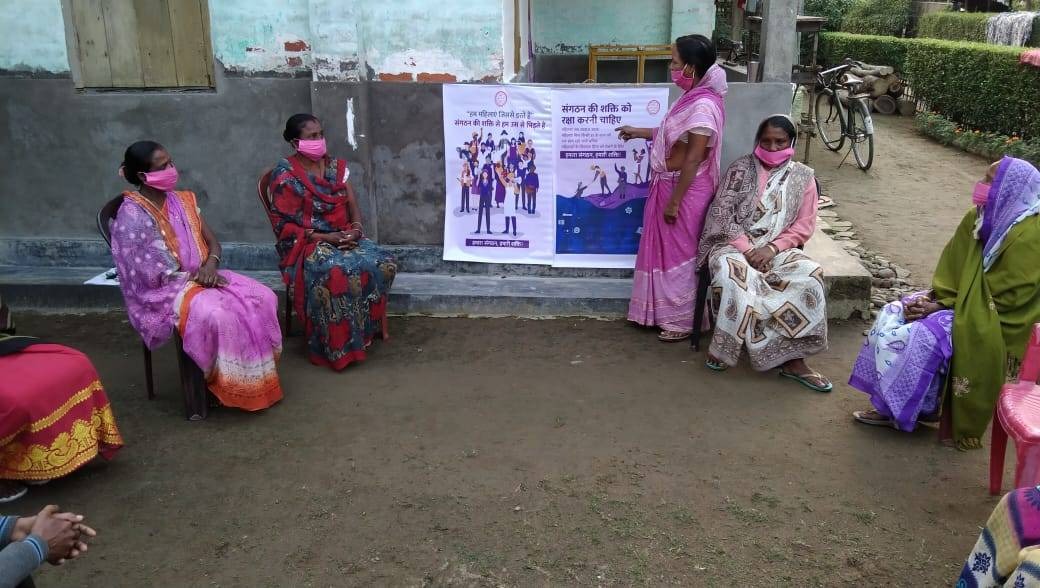
In Assam, India, the Women’s’ Water, Sanitation and Health Committees held a series of education and awareness activities in several tea plantations. The posters were used to introduce the key concepts and to discuss women’s experiences of violence and harassment in the plantation. Women tea workers reported on both the physical and economic vulnerabilities, the daily verbal and physical abuse they face, and discussed how this can be overcome through concerted action by their self-organized Women’s’ Water, Sanitation and Health Committees.
In Indonesia, the Federation of Hotel, Restaurant, Plaza, Apartment, Catering and Tourism Workers’ Free Union (FSPM) and the National Federation of Food and Beverage Workers (FSBMM) launched awareness campaigns in the workplace.
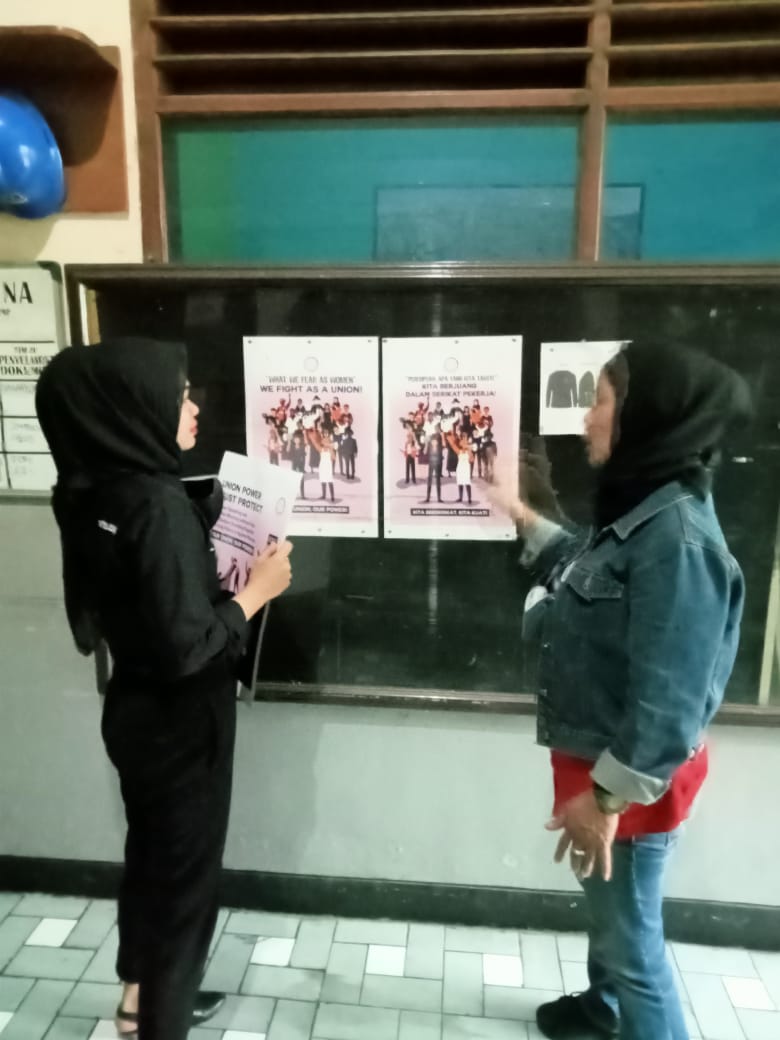
FSPM undertook an intensive awareness campaign among members in hotels and restaurants in Bandung, Surabaya and Yogyakarta. The unions also posted the posters on union noticeboards in the workplace.
The FSBMM Women’s Committee and FSBMM Youth Committee included the issue of violence against women in the agenda of their respective meetings in Bogor on November 13 and 14, 2021. FSBMM combined education and training with stronger policy commitments by affiliated unions, collective bargaining and negotiating more effective measures to make workplaces safe for women.
In Myanmar, a city-wide federation of hotel and resort workers held education and awareness activities on December 3, 2021. The posters were used to facilitate discussion of the different kinds of fear women face, what causes it, and what should be done. Women hotel and resort workers explained the way in which irregular, precarious employment arrangements and job insecurity contribute to their vulnerability and the violence they face.


 SEWA membentuk kekuatan tawar menawar kolektif yang terorganisir dari pekerja perempuan wiraswasta untuk pertama kalinya. Di antara keanggotaan IUF di SEWA, keberhasilan luar biasa para pekerja perempuan beedi (tembakau) dalam menawar secara kolektif harga yang dibayarkan oleh pembeli merupakan salah satu contohnya. Pengalaman yang sama terulang dengan pekerja dairy perempuan. Representasi kolektif dan kekuatan SEWA sebagai serikat pekerja juga memungkinkan pedagang sayur dan penjual makanan untuk mempertahankan hak dan kepentingan mereka dalam bernegosiasi dengan otoritas pemerintah. Inilah pemberdayaan yang mengalir dari nilai dan karya Elaben serta keadilan ekonomi dan sosial yang ia harapkan. Seperti yang ditulis Elaben dalam edisi pertama SEWA Rashtriya Partika, pada April 2016, melalui pengorganisasian perempuan dapat “mencapai SUARA, VISABILITAS, dan VALIDASI yang sangat dibutuhkan”.
 Foto Elaben bersama penjual sayur di Ahmedabad setelah mendapat perlindungan hukum atas haknya sebagai pedagang kaki lima. Foto diambil pada 25 Februari 2010 oleh fotografer Tom Pietrasik
 Whole chapters are dedicated to gender perspectives. In most cases it simply means women are included in the data now. There’s a gender breakdown in the facts and figures that wasn’t there a decade ago. So women are visible for the first time in the data. Governments, companies and international agencies can now say “of course”. But what happens with this data? How does it change the situation women are in? How do women use it change the situation they are in? Ten years from now, will the data show this change? (During the pandemic the data did change. The gender pay gap widened again, setting women back a decade or more.)
 The point is that gender perspectives and gender-based approaches are meaningless if they do not address the issue of power. By extension, gender perspectives and gender-based approaches are only of consequence if they contribute to women combining to exercise their collective power to bring about fundamental change. A gender perspective shouldn’t be static point of view (a snapshot, profile or dataset). It has to be a dynamic process of interaction between the systemic and institutionalized vulnerability and marginalization of women, women’s collective confidence and their ability to organize, and the collective struggle of women to overcome discrimination, oppression and exploitation.
 In this context we need critically assess any claim to include gender perspectives and gender-based approaches. We must ask how do women have more power in decision-making? How do women have more control (in the allocation of resources and exercise of rights and representation) to determine both the action and its outcomes? How do women use their collective power to institutionalize (lock in) these gains and ensure that whatever was gained isn’t taken away?