by IUF Asia/Pacific | Aug 24, 2021 | Food Security, Land & Freedom, Social Justice
 For more than a decade the private sugar mill operated by Gangakhed Sugar and Energy Private Limited (GSEPL) in Parbhani, Maharashtra, has regularly released untreated effluent into a nearby lake and irrigation canals. This has caused a such a significant loss of aquatic life in Mannath lake that the fisherfolk dependent on this lake have lost their livelihoods. The untreated effluent from the sugar mill also polluted irrigation canals with a detrimental impact on the crops and soil on nearby farms. For a decade fisherfolk and farmers have struggled to end this pollution. For a decade the food industry has been undermining food security.
 Soon after GSEPL started its operations in 2010, the mill released untreated effluent into Mannath Lake and irrigation canals during the sugarcane crushing season. Fisherfolk filed a case with the National Green Tribunal (Western Zone) Bench, Pune, against the company for “polluting the water in Mazalgaon Right canal and Mannath lake, causing water pollution and thereby causing a threat to human health, fishery yield and ecology.” The case referred to pollution caused by “industrial waste molasses and chemical mixed water”.
Despite this, the mill again released untreated effluent into the lake in the 2013-2014 sugarcane crushing season.
When fisherfolk and farmers made complaints about this pollution, GSEPL management responded with violent attacks, threats and intimidation. The company also took legal action against fisherfolk and farmers, forcing many of them to abandon their livelihoods and migrate.
The extent of this brutality is reflected in the private prison operated by the mill to punish indebted farmers and critics. This was described in 2012 as follows:
On 30/04/2012 around 11 am, the goons of the mill management came into the UCO bank branch Gangakhed, kidnapped and took V. to the privately owned prison in the factory premises. Mill management was maintaining their own prison for assaulting farmers, workers and everyone who was raising the questions against mill management. According to V. that place was in dark, smoky and unhygienic. When he entered the custodial room there were around 34 detainees were already present. While held here he assaulted many times. All these detainees were kept their [sic] like slaves without any basic amenities and food. Mill management released him the next day around 5 pm.
A public demonstration against the GSEPL mill management on 18 October 2013 led to the demolition of the private prison. Yet the violent attacks on fisherfolk and farmer leaders continued.
 While water pollution was damaging the ecology, destroying livelihoods and undermining food security (in the prevailing fear of private prisons and violence), the conglomerate Shree Renuka Sugar bought sugar from the GSEPL mill. One of the leading customers of Shree Renuka Sugar at that time was Hindustan Coca-Cola Beverages Private Limited (HCCBPL). Even after the case was filed in the Green Tribunal and the media reported on these violent attacks on the community, Shree Renuka Sugar made several more purchases from GSEPL. This environmental pollution, human rights abuse and food insecurity ran from Mannath lake through the supply chain of Coca-Cola in India.
While water pollution was damaging the ecology, destroying livelihoods and undermining food security, GSEPL successfully registered as an emission-reduction project under the Kyoto Protocol’s clean development mechanism. The UNFCCC’s Clean Development Mechanism (CDM) Executive Board assigned Project No.4816 to Gangakhed Sugar & Energy Private Ltd (GSEPL) 30 MW Bagasse Based Co-generation Power Project. Despite several reviews over 10 years, the CDM ignored the large-scale pollution of Mannath lake and surrounding farmlands. Even when the Green Tribunal ruled in July 2014 that GSEPL had extensively polluted Mannath lake and must pay to replace its water, the company continued to be a green project under the Kyoto Protocol.
 After a decade the fisherfolk union, Godavari Magasvargiya Matsya Vyavsay Sahakari Sanstha (GMMVSS), continues to struggle for compensation for their lost livelihoods and to end the pollution that has destroyed the ecology of Mannath lake. They seek an end to an unsustainable food industry and to regain their right to food security.

by IUF Asia/Pacific | Jun 3, 2021 | COVID-19, Land & Freedom, Right to a Safe Workplace
With the surge of COVID-19 in cities across India, millions of migrant workers returned to their villages in rural areas. They feared a repeat of the 2020 crisis when they lost their jobs and livelihoods during the strict lockdown. Around 20 per cent of migrant workers who returned in 2020, stayed in their villages. This added to the employment crisis in rural areas.
In this crisis the Mahatma Gandhi National Rural Employment Guarantee Act (NREGA) has proven to be a vital source of livelihood for rural communities. In most cases it is the only work available for rural workers.
NREGA provides 100 days of paid employment on public works for unemployed rural workers. This work includes building public wells, irrigation ditches, and working on their own land. This in turn supports access to potable water and food security in rural communities.

NREGA applications
The IUF-affiliated Gujarat Agricultural Labour Union (GALU) assisted more than 20,000 members and returned migrant workers in six tribal districts to gain paid work under NREGA. Rural workers in tribal districts are the most vulnerable, with a high rate of out-migration due to poverty. After returning to their villages the paid work under NREGA is crucial to their livelihoods.

COVID-19 testing at NREGA sites
GALU ensures that NREGA pays for marginal farmers to farm their own land for food crops and rural communities have access to food grains under National Food Security Act. While promoting mask wearing, distancing and washing hands at NREGA worksites, GALU also arranged for COVID-19 testing with local authorities.
 GALU is now focused on promoting vaccine awareness and access to vaccines. GALU is organizing vaccination drives in rural communities through its awareness campaign and arranging free & safe transportation to vaccination centres for women workers. Initially this transportation will be arranged for 2,000 women.
In the COVID-19 era NREGA will continue to play a vital role in rural workers’ access to the right to food and nutrition and the protection of livelihoods. GALU along with other IUF-affiliated unions such as SEWA are demanding that NREGA coverage is extended to 200 days of paid work.

by IUF Asia/Pacific | Jun 3, 2021 | COVID-19, Land & Freedom, Right to a Safe Workplace, Women Unions & Power
In the early stages of the pandemic in 2020, women’s self-organized Water, Sanitation & Health Committees on tea plantations in West Bengal and Assam included COVID-19 awareness in their ongoing fight for health and safety rights.
 From April 2020 they ensured physical distancing and wearing masks, assisted home-based workers to make three-layered masks and distributed them to workers in the plantation. They also formed teams to inspect company-run hospitals for pandemic preparedness and met with the plantation management to secure quarantine and isolation facilities in the plantations.
 The women’s Water, Sanitation & Health Committees are now playing a vital role in encouraging workers and their families to be vaccinated. They met with the management in plantations in Assam and West Bengal to ensure equitable and safe access to vaccines within the plantations.
The women’s committees are also working closely with government women health workers (ASHA workers) to ensure that when vaccines are available, plantation workers are ready and willing to be vaccinated.
 The women’s committees will also maintain a list of names and dates to ensure workers and their families return for their second dose.
A Water, Sanitation & Health Committee member in the Nowera Nuddy tea plantation in West Bengal commented: “Despite the shortage of vaccines, we are getting some. So we must make sure that as many as people as possible in the plantation are vaccinated. No vaccine allotted for the plantation should be returned unused.”
So far 146 workers and family members in the Nowera Nuddy tea plantation are fully vaccinated.

by IUF Asia/Pacific | May 4, 2021 | Campaigns, Collective Bargaining Rights, Education & Training, Freedom of Association, Land & Freedom
In 2019 the United Nations General Assembly declared 2021 as the International Year for the Elimination of Child Labour (IYECL). The prospects of any progress towards this goal are extremely dim. As we have already witnessed, decades of neoliberal policies created extreme vulnerability among working people and turned the pandemic into a crisis. As we enter the worst global recession since the 1930s and the worst global food crisis in 50 years, there is a risk that child labour will increase over the next decade. What the UNCTAD Trade and Development Report 2020 calls “the lost decade” will also be a lost decade for children exploited in all forms of child labour.
The greatest exploitation is in agriculture where 108 million children work, constituting 70% of child labour. While poverty is the obvious context of child labour, we have worked with our members in agriculture and plantations to identify three key drivers of child labour:
- piece rate wage systems
- unfair crop prices
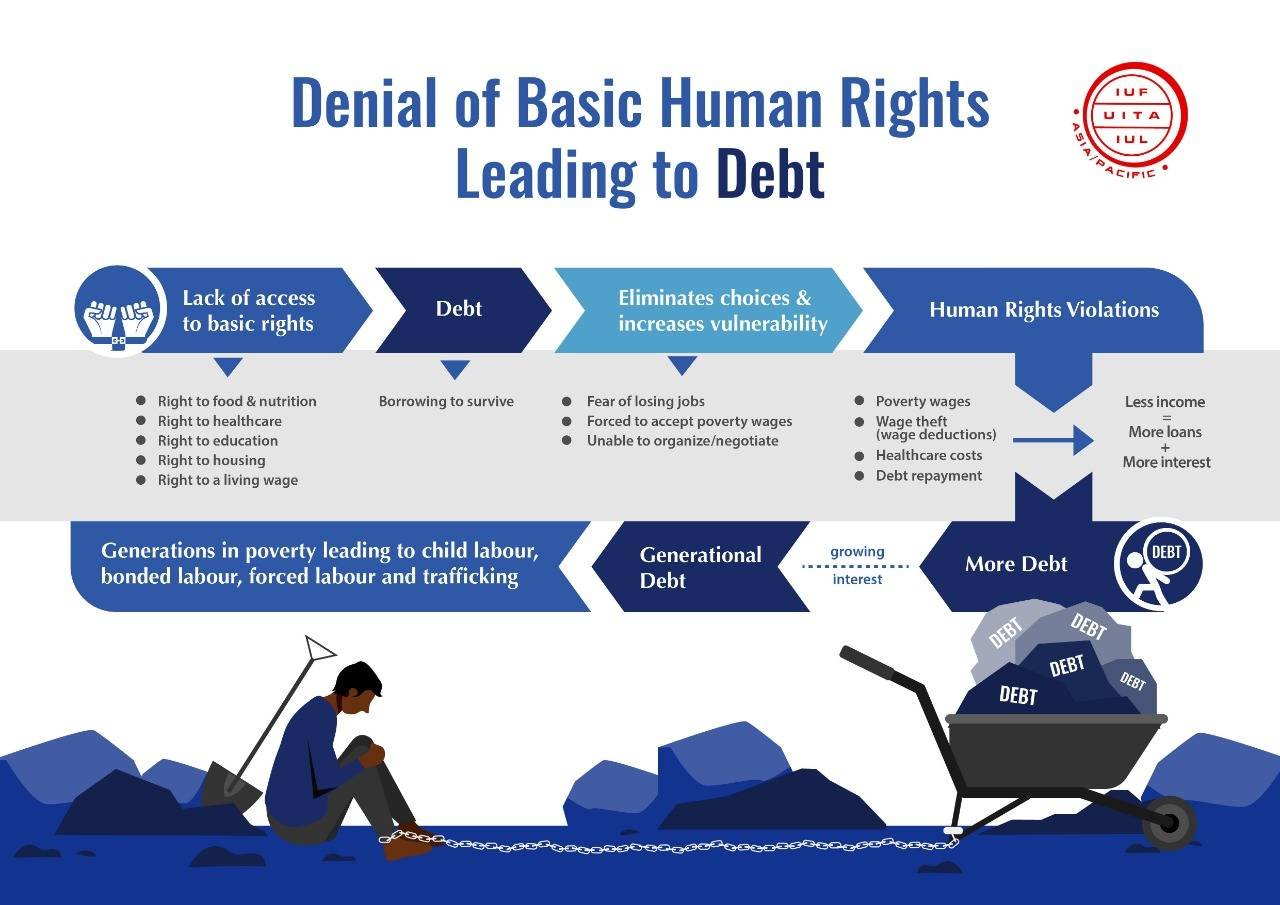
- denial of human rights and debt
There are of course other causes of child labour that need to be addressed. Identifying these three specific drivers helps to identify solutions.
- We must establish guaranteed minimum wages as a living wage throughout the year and stop wage theft and unfair deductions. Agricultural, farm and plantation workers can only do this through the right to organize (as defined under ILO Convention No.11) and through collective bargaining. This is also a critical issue in the supply chains of transnational companies that claim to be addressing child labour. By allowing suppliers to deny the right to freedom of association and impose piece-rate wage systems, these companies are perpetuating child labour.
- We must guarantee fair crop prices and collective bargaining to ensure this translates into better, more stable incomes throughout the year. This also requires government crop price support schemes. Again, transnational companies claiming to eliminate child labour in their supply chains need to ensure fair prices are paid. The premium should be paid to small and marginal farmers and farm workers, not layers of traders and “middlemen” or certification bodies.
- We need to recognize the causes of debt in the context of lack of access to human rights. (The report to the UNHCR on private debt and human rights in January 2020 provides a useful framework for this.) We must eliminate the causes of family debt and ensure free access to health care and education and access to affordable housing, food & nutrition. We need to extend social protection and livelihood assistance to all small and marginal farmers and farm workers. (ILO Recommendation No.202 is an important instrument in defining the scope of this social protection.) Social protection must be financed through corporate taxes. Transnational companies that claim to be eliminating child labour through Corporate Social Responsibility (CSR) schemes should also stop hiding in tax havens or demanding tax holidays.
Another aspect of our program is to incorporate the elimination of child labour into our work on climate change and climate justice. We are working with our affiliates to develop a better understanding of the link between child labour and climate crisis and climate migration, as well as biodiversity loss and environmental destruction. Climate change and biodiversity loss lead to debt, displacement, and climate migration. There is a higher incidence of child labour among climate migrants as they desperately seek work elsewhere. There is also a higher risk of trafficking in children. Our affiliates in several countries, particularly India, Bangladesh and Myanmar, have been campaigning for crop subsidies and livelihood assistance for farmers and farm workers affected by climate change. These demands should be seen as vital to the elimination of child labour.
Download higher resolution JPEG piece-rate wages [1MB] or PDF piece-rate wages [3MB]
Download higher resolution JPEG unfair crop prices [3MB] or PDF unfair crop prices [10MB]
Download higher resolution JPEG debt & human rights [1MB] or PDF debt & human rights [1MB]