The military-controlled Union Election Commission (UEC) declared that only 102 townships out of the country’s 330 townships will be included in the elections starting on 28 December 2025. That is only 31% of the total electoral constituencies.
Why is the other 69% excluded? Because the majority townships were liberated from military rule by the People’s Defence Force (PDF) and Ethnic Revolutionary Organizations (EROs) fighting to restore democracy. In addition, dozens of townships are under attack by the military. The ruling military junta is conducting aerial bombing – including bombing schools and homes – to take back control.
That is also why the so-called voting begins on 28 December 2025 as phase one and continues for two or three months. This is engineered to give the military more time to forcibly take control of more townships.
If the number if townships included by the military-controlled Union Election Commission (UEC) increases beyond 31% before 28 December or during the three-month election period, it is only because the junta has retaken control through military offensives against the people, at great cost to life.
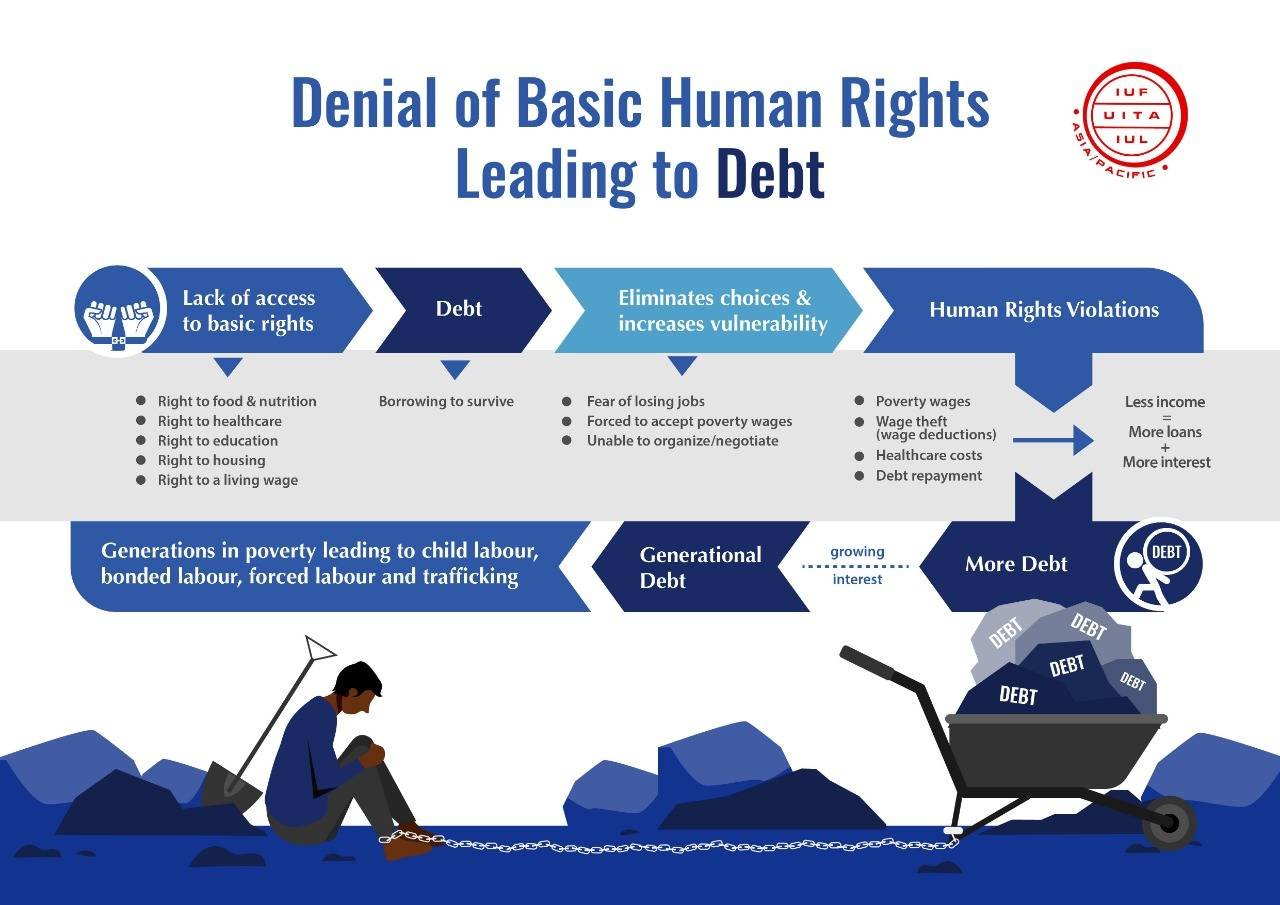
There is no greater moral, social and political failure than the refusal of governments to protect the rights of children; to bring an end to all forms of child labour; and to ensure that all children have unconditional access to free public education, along with their families’ access to affordable housing, adequate and nutritious food, and public health care. Taken together, these are fundamental, universal human rights that should ensure that everyone, everywhere can enjoy what the Universal Declaration of Human Rights describes as a life worthy of human dignity.
When looking at Afghanistan, this moral, social and political failure is multiplied several times over. As the international community continues to ignore the human rights abuses and repression by the Taliban, the rise in child labour is causing terrible hardship and suffering. The stories of children and their families reported here makes it painfully clear what is happening. And yet an entire generation of children not going to school – and all the girls who are denied access to education – means this is also about the future. Unless we act, this institutionalized denial could be perpetuated for generations. This is not an accidental outcome of irrational and oppressive policies. A generation without education, a generation without literacy, certainly serves a regime founded on ignorance and intolerance.
In Afghanistan under the Taliban, this institutionalized denial of human rights extends to the exclusion of women from work and public life. This not only impoverishes families by denying incomes previously earned by women but compels children to work to replace the incomes that women are no longer able to earn. This is further exacerbated by the ban on education for women and girls. As several of these stories explain, once the Taliban banned girls from attending school beyond sixth grade, there was nothing left for girls but to work.
It is in this sense that institutionalized denial drives child labour in Afghanistan today. Women are denied the right to work and engage in economic activities in public; girls are denied the right to education; and entire families are denied the right to their livelihoods as they face economic hardship and poverty. It is this institutionalized denial of human rights that is forcing children to engage in child labour, not poverty.
Yet the Taliban is already using the food security crisis, increased poverty, and the massive increase in child labour to seek international aid and technical cooperation with UN agencies and foreign governments. Our moral, social and political failure will be compounded even further if UN agencies and foreign governments provide such international aid and technical cooperation. This would only serve to give the Taliban recognition as a government and allow it to establish its legitimacy – a legitimacy it does not currently have.
No amount of international aid and technical cooperation can address poverty and child labour as long as its fundamental cause – the ban on the right of women to work and engage in economic activities in the public domain, and the ban on the right of women and girls to education. Unless these bans are lifted and the human rights of women and girls are institutionalized, then the institutionalized denial of human rights will continue to drive an increase in child labour. The stories of children’s hardship and suffering reported here in these pages will be multiplied over and over in the coming months and years. As will our shame for failing the children of Afghanistan.
The courageous women journalists of The Afghan Times have published a new report on child labour in Afghanistan in conjunction with the International Day for the Elimination of Child Labour on June 12, 2025.
The 64-page report examines the hardship and exploitation faced by children in several occupations, as they struggle to support their families under Taliban rule. With women banned from employment and economic activities in public life, children are compelled to earn family incomes. The ban on girls attending school beyond sixth grade means they are also compelled to work in the informal economy, and will do so for the rest of their lives.
This urgent message in this report gains a greater sense of urgency as governments and international aid agencies start to recognize and legitimate the Taliban, further deepening the crisis faced by women and girls for decades to come.
Please click here to download the full report [PDF 220MB]
Dr Muhammad Hidayat Greenfield, Regional Secretary
There is no greater moral, social and political failure than the refusal of governments to protect the rights of children; to bring an end to all forms of child labour; and to ensure that all children have unconditional access to free public education, along with their families’ access to affordable housing, adequate and nutritious food, and public health care. A crucial enabling right is the right of adult workers, farmers and youth to freely organize and collectively represent themselves. Taken together, these are fundamental, universal human rights that should ensure that everyone, everywhere can enjoy what the Universal Declaration of Human Rights describes as a life worthy of human dignity.
Yet nearly eight decades after the the Universal Declaration of Human Rights was adopted in 1948, such a life remains beyond the reach of over 180 million children exploited as child labour today.
Many in the UN system and its public-private agencies today assume this exploitation is the result of impoverished parents and/or the uneducated, unaware adults that employ these children. Education, awareness and technical cooperation with governments is – we are told – the answer. Even as authoritarian and military governments brutally repress civilian populations, and democratic governments systematically deny and exclude people based on race, ethnicity, social origin, caste or religion, such actions are given international legitimacy through technical cooperation and capacity building.
Over 180 million children are not denied a life worthy of human dignity simply because of poverty or a lack of technical capacity within governments. This denial is institutionalized through discrimination and exclusion based on race, ethnicity, social origin, caste or religion. It is an institutionalized denial felt most of all by indigenous and First Nations peoples, who are first and foremost denied the right to the land and resources that are theirs to begin with. The resulting economic and political marginalization (reinforced by state violence) creates and perpetuates this poverty.
Ultimately this institutionalized denial undermines the universality of human rights (everyone, everywhere) by removing hundreds of millions of adults, youth and children not just from access to human rights, but from the category of being human. You cannot have a life worthy of human dignity if you are not even treated as human.
In September 2020, the Dutch global management of Chupa Chups maker Perfetti van Melle dismissed evidence of child labour at their factory in Bangladesh, laughing and joking during the presentation of photos, videos and school records. Far from being unusual, it illustrates what happens when children in Asia are not considered to be human.
Poverty and child labour continue not simply due to insurmountable economic challenges and government capacity, but because poverty alleviation and eliminating child labour have become economic activities in and of themselves. It justifies the existence of government programs and a vast network of foundations, NGOs and public-private institutions. As long as such marginalization and institutionalized denial persists, any policies aimed at “poverty alleviation” and “inclusion” end up as a bureaucratic state enterprise or a profitable commercial business activity – or both.
Of the 52 workers who died in the Hashem Foods Factory fire in Bangladesh on July 10, 2021, 19 were children. The factory made food products for brands like Lotte from South Korea and Nocilla from Spain, but none of these companies took responsibility. While the factory fire was still burning national trade union confederation officials, offering a “Rana Plaza” formula, contacted families and offered to get compensation in return for a share of the money. Dozens of foundations and NGOs then became involved. From the ILO office silence, as the entire focus shifted (again) not to human rights and collective human rights of workers, but to fire safety standards.
In several countries in South and Southeast Asia, we see dozens (and in some countries hundreds) of foundations, NGOs, consultancies, advisory groups and even some national trade unions engaged in the business of talking about child labour (a source of international project funding and corporate funding) rather than concerted action to end child labour.
And yet standing apart – underfunded, underrepresented, and often ignored – are those committed foundations, NGOs, networks, alliances, journalists, and community organizations dedicated to advocacy, education and action who remain courageously determined to bring an end to child labour.
It is our moral, social and political obligation as trade unions to extend our solidarity and support to these courageous, committed organizations and ensure their success. They must be heard and their impact must be felt.
We can no longer stand by and blame structural poverty, lack of awareness or insufficient government technical capacity for the continued rise in child labour globally. We must fight against institutionalized denial, and fight together with marginalized peoples to remove the barriers preventing their access to universal human rights, including the right to live a life worthy of human dignity. Child labour disappears when these rights are realized, as children have food, housing, health care and access to quality education that includes, welcomes and nurtures them without denying or destroying their cultural, religious and social values and identity. And without requiring it to be financially profitable.
To be clear, a civilizing mission to educate poor people to stop their children being brutally exploited in work is no longer needed (it never was). When adults have access to decent work and livelihoods, to land and resources, and youth have access to lifelong skills learning and quality apprenticeships and their own culture and belief systems, then they will themselves ensure their collective access to rights and an end to child labour. They know how to love their children. No technical cooperation, lectures or posters are needed.
Global companies allocate significant resources to NGOs, accreditation agencies and foundations to manage the child labour issue in their supply chains. As these organizations and their experts consume the premium before it reaches farmers, we end up with posters telling ‘uneducated’ farmers not to use child labour and instead use good agricultural practices. Much like colonial times, the focus is on behaviour and culture change (becoming more “civilized”) rather than overcoming debt and access to human rights.
It is of course governments and their failed international institutions that need greater awareness, posters and public campaigns to pressure them into action.
With all its faults and limitations, the Universal Declaration of Human Rights was adopted in 1948 at what was thought to be the beginning of the end of colonialism, promising racial equality, an array of human rights, and a life worthy of human dignity. For hundreds of millions of adults, youth and children today – including 180 million children in child labour – it seems that none of this has been achieved yet. That is our collective failure. In the light of this failure, it remains our collective responsibility to organize and take social and political action to realize these goals.
On July 1, 2024, the Accor-branded Sofitel Philippines Plaza Hotel will close for renovation. Although it will eventually reopen, the owning companies behind Philippine Plaza Holdings, Inc (PPHI) – which is owned by a joint venture between Kajima Group’s subsidiary Kajima Development and Allied Properties in Hong Kong – have decided to declare a complete closure with mass layoffs. In complete disregard for international human rights standards and its obligations under the OECD Guidelines, Accor has simply gone along with this.
When the Philippine Plaza Chapter (PPC) and the Philippine Plaza Supervisory Chapter (PPSC) of NUWHRAIN requested negotiations on the terms and conditions of the renovation, Accor and Kajima Allied’s Philippine Plaza Holdings, Inc (PPHI) simply refused. They would not even provide an explanation of why the hotel will close when much of the renovation has already been completed. Even while Accor and hotel management told the unions – then openly declared in the media – “the hotel is unsafe!” … events, parties, conferences and bookings continued.
Kajima Development and Allied Properties maintain a lease on the beachfront and land through Philippine Plaza Holdings, Inc (PPHI) that will expire in another 17 years. Instead of seeking to terminate the lease because of the “closure” of the luxury hotel resort, they are seeking an extension to a 25-year lease. So Accor and the owners of the iconic Sofitel Philippines Plaza Hotel have plans. The workers who dedicated dozens of years – and for some decades – of their working lives to make Sofitel Philippines Plaza Hotel so successful have no part in this plan. They will be thrown out like trash on July 1, 2024.
This is actually the purpose of this declared “renovation”. Get rid of hundreds of workers and all of their pensions and benefits. Dismantle the unions and the collective bargaining agreements that recognize workers’ contribution to the business through decent wages and benefits, and reset the business. So when the hotel reopens it will be free to hire an entirely new workforce with zero years of service, and will not need to negotiate with any union that is intent on protecting workers’ rights and bargaining fair wages. The zero reset in this renovation will mean zero rights for the workers that walk through the back door in the renovated, reopened hotel resort.
Opened on September 26, 1976, the hotel went through three major renovations (1994, 1995, 2007) and every few years there were a series of extensive resonations and upgrading. Accor took over the hotel operations under its luxury Sofitel brand in 2007 with a major renovation. 17 years later the hotel will go through another renovation because – the owning company and Accor claim – it is “unsafe”. Accor has confused approach to safety, with its “Allsafe” label coinciding with rights abuses and unsafe working conditions in countries such as Indonesia.
Workers now see the dark side the catchphrase of Accor’s luxury Sofitel Philippine Plaza resort: “WHERE LIFE LIVES!” And they are left to ask, “For who?” It lives for guests, for profits, for business. But workers will not be able to live their lives. They face hardship, anxiety and bitterness.
What Accor refuses to recognize is the promising potential of workers already working in their hotels in the Philippines, and the hopeless they have created for hundreds of workers and their families. July 1, 2024, will be a dark day for these families and will cast a shadow on Accor’s upcoming hotel properties in the Philippines for decades to come.